Kelley's Sewage Cleanup
Milo, IA · 50166 Basements · Bathrooms · Crawl Spaces · Businesses

Floor Drain Backup Cleanup in Milo, IA Near Me

Sewage pooling around a basement floor drain means the main line is backing up. A local crew cleans and disinfects the floor.

Sewage Backup Cleanup
Local Cleanup Crews
Category 3 Procedures
Homes and Businesses

The basement floor drain is usually the lowest opening on the whole drain system, so when the main line backs up, that is where the water comes out. Gray or brown water pooling around the grate, a ring of debris after it drains, or a smell that wasn't there yesterday all point the same way. If it is happening in Milo, IA, we connect you with a local crew for floor drain backup cleanup.

What a floor drain backup tells you

Floor drains tie into the sewer line, often just upstream of where the main leaves the house. Water coming up there means the line downstream can't take the flow. Clues that help whoever diagnoses it:

  • It happens when the washing machine or a shower drains upstairs
  • It happens during or right after heavy rain
  • Water rises even when nothing in the house is running
  • The trap has dried out and you smell sewer gas but see no water

That last one is a different, smaller issue. A floor drain trap that dries out lets sewer gas into the basement, and pouring a bucket of water in it often fixes the smell. Standing sewage around the grate is a backup and needs cleanup.

Cleaning the area around the drain

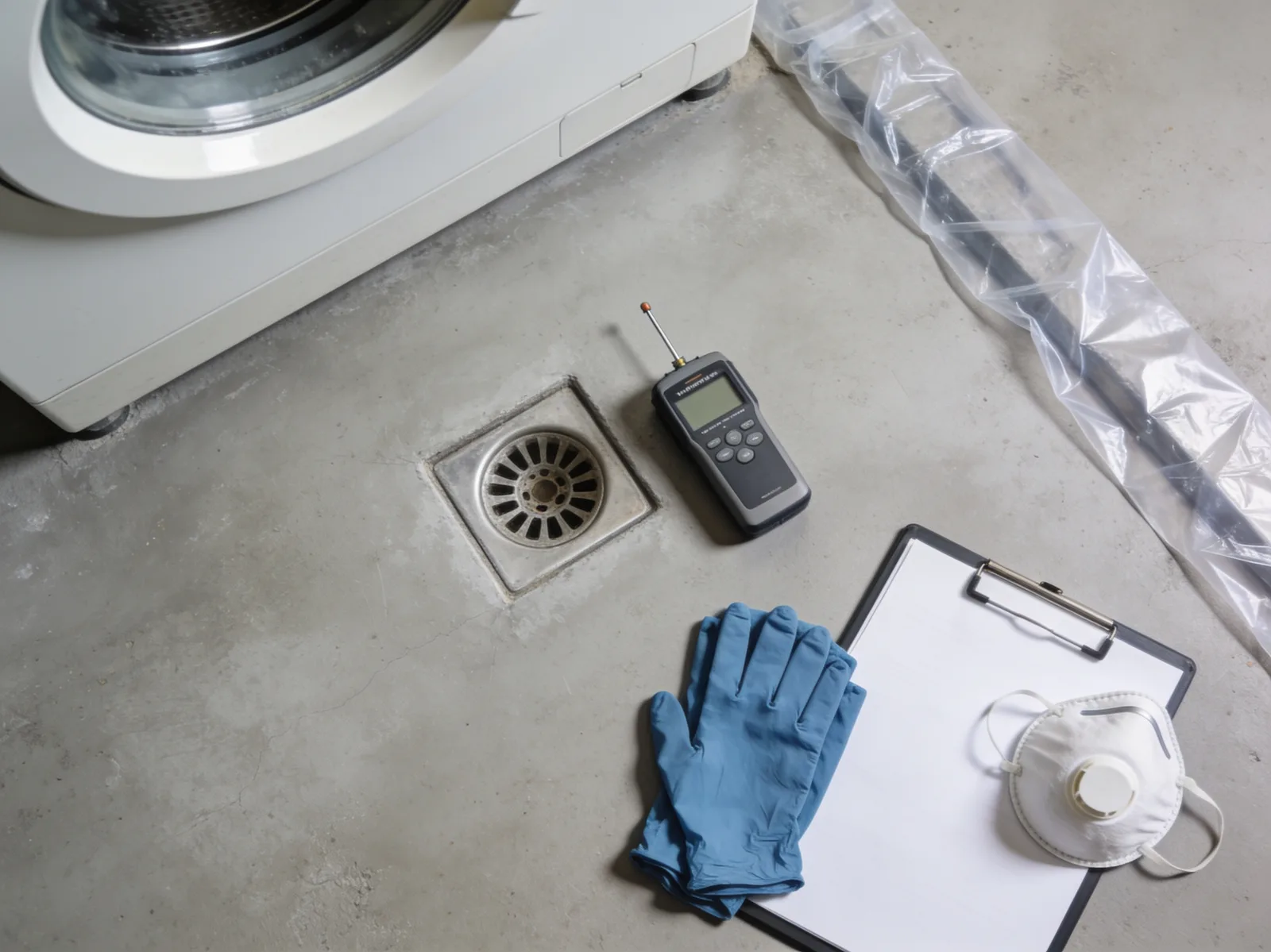
On bare concrete, the job is mostly extraction, scrubbing and disinfecting. The crew pumps out the water, shovels or vacuums the sludge, scrubs the slab with a stiff brush and detergent, applies a disinfectant and gives it the contact time on the label before rinsing. Concrete is porous, so it gets a thorough treatment, and the base of nearby walls gets checked with a moisture meter. If the water spread under storage shelves, boxes and anything cardboard usually go.

When the basement is finished

Floor drains in finished basements are often tucked into a utility room, but the water doesn't stay there. Carpet, padding and the bottom of drywall in the next room can soak it up fast. That turns a small cleanup into a larger tear-out, covered on our page for basement sewage cleanup. Wet walls are handled as described under drywall removal.

Stopping it from coming back

A floor drain that keeps backing up has a cause downstream: roots, a belly in the pipe, grease, or a city main that surcharges. Clearing and inspecting the line is work for a plumber, and some homes add a backwater valve or a drain plug with a float. The cleanup crew can share what they saw. If storms are the trigger, read the page on sewer backups for the lateral versus main question.

Keep kids and pets out of the basement and use rubber boots and gloves if you need to go down. Call (217) 404-1483 and we will connect you with a crew for floor drain backup cleanup in Milo, IA.
How cleanup works

Four steps to a clean, dry space in Milo, IA

01

Stop the water

Shut off every fixture, keep kids and pets out, and take photos from a dry spot. Then call and tell us where the sewage is.

02

Get matched with a crew

We connect you with a local sewage cleanup crew covering Milo, IA and you go over the scope, timing and price with them.

03

Extract and remove

The crew pumps out the sewage, bags solids and cuts out carpet, pad and drywall that soaked it up.

04

Disinfect and dry

Hard surfaces get cleaned and disinfected, then air movers and dehumidifiers run until moisture readings show dry.

Coverage

Sewage Cleanup Across Milo, IA

Sewage backup cleanup across the neighborhoods and ZIP codes around Milo, IA.

ZIP codes we serve

50166
Floor Drain Backup Cleanup in Milo, IA

Sewage cleanup FAQs

Frequently asked questions about sewage cleanup

Questions we hear most about Floor Drain Backup Cleanup in Milo, IA.

Talk to a real person
Does homeowners insurance cover sewage backup?
<p>Often not by default. Many standard homeowner policies exclude water that backs up through drains or sewers unless a sewer backup or water backup endorsement was added. Check your declarations page or call your agent. If you do have coverage, document everything before cleanup starts: photos, video, a list of damaged items, and the date and weather. Keep damaged items until the adjuster says otherwise, and ask the cleanup crew for moisture logs and a written scope. That paperwork helps either way.</p>
Why is sewage coming up through my basement floor drain?
<p>The floor drain is usually the lowest opening on the drain system, so when the main line can't carry the flow, water comes out there first. The cause is downstream: roots in the lateral, a sag in the pipe, grease buildup, or a city main that surcharges during heavy rain. Finding it is plumber work, often with a camera. The cleanup of the slab and anything around it is covered on our page for <a href="/services/floor-drain-backup-cleanup">floor drain backup cleanup</a>.</p>
Is it safe to stay in the house after a sewage backup?
<p>It depends on how much of the house is affected. Many families stay home when the backup is limited to a basement or one bathroom that can be closed off. Keep children, pets and anyone vulnerable out of the affected area, and don't walk through it without boots and gloves. If sewage reached living areas, the HVAC returns or the only bathroom, staying elsewhere for a few days may make more sense. The crew can tell you which areas are off limits while they work.</p>
How do I get rid of a sewer smell after a backup has been cleaned?
<p>A lingering smell usually means something is still wet or contaminated: carpet pad left in place, drywall that wicked higher than anyone checked, or damp framing. Moisture readings help find it. A dried-out floor drain trap can also let sewer gas in, and pouring water down the drain often fixes that. Deodorizing only works after the source is gone. Our page on <a href="/services/sewage-odor-removal">sewage odor removal</a> explains how crews track the smell down.</p>
Does drywall have to be removed after a sewage backup?
<p>Drywall that absorbed sewage is usually removed. Gypsum and its paper facing soak up water and wick it upward, and contaminated drywall can't be reliably disinfected. Crews measure the wet line with a moisture meter and make a flood cut a foot or more above it. Insulation inside the wall comes out too. The studs usually stay, and get cleaned, disinfected and dried before new drywall goes up. Details are on our page for <a href="/services/sewage-damaged-drywall-removal">sewage damaged drywall removal</a>.</p>

Book sewage cleanup

Sewage Backup in Milo, IA? Call now.

Tell us where the sewage is and we connect you with a cleanup crew covering Milo, IA. Scope, timing and price are gone over on the call. (217) 404-1483.

Call (217) 404-1483 Services